Alpha Spine Center Patient Education
Updated November 1, 2026 · Originally published 2023-12-18
Understand lower cross syndrome, why posture alone does not explain low back pain, and how an individual movement assessment can guide your next steps.
What does lower cross syndrome mean?
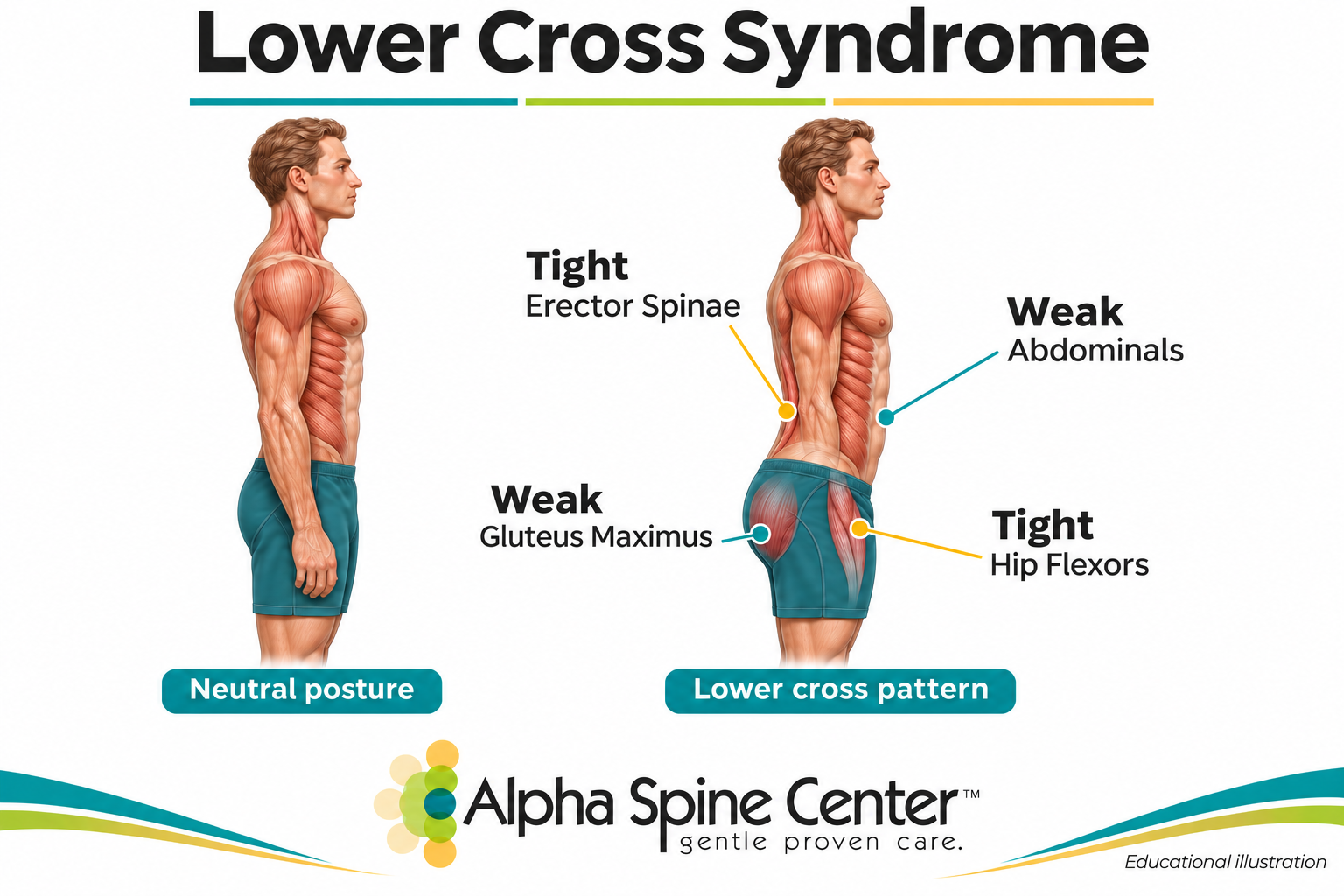
Lower cross syndrome is a term used to describe a proposed pattern of muscle tightness and weakness around the hips, pelvis, and trunk. You may hear it used when discussing low back posture or movement. It is a starting point for a conversation, not a diagnosis you can confirm from a photograph. A noticeable low back curve does not, by itself, tell us what is causing pain or which muscles need treatment.
Start with your activities and symptoms
Does your back bother you after sitting, while lifting, during running, or when getting out of a chair? Those details are more useful than trying to maintain one perfect posture all day. Tell your clinician when the problem began, what changes it, whether it travels into a leg, and what you want to get back to doing. Different people with similar posture can have different needs.
Practical habits to discuss
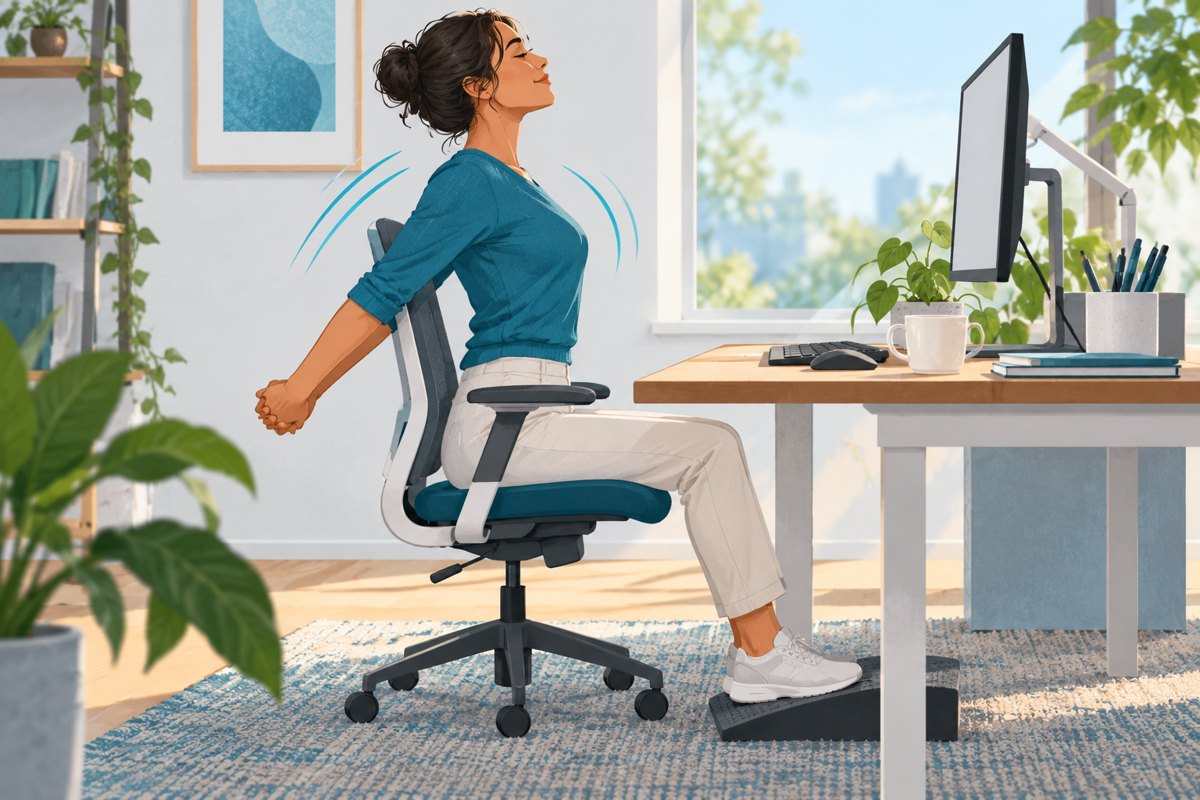
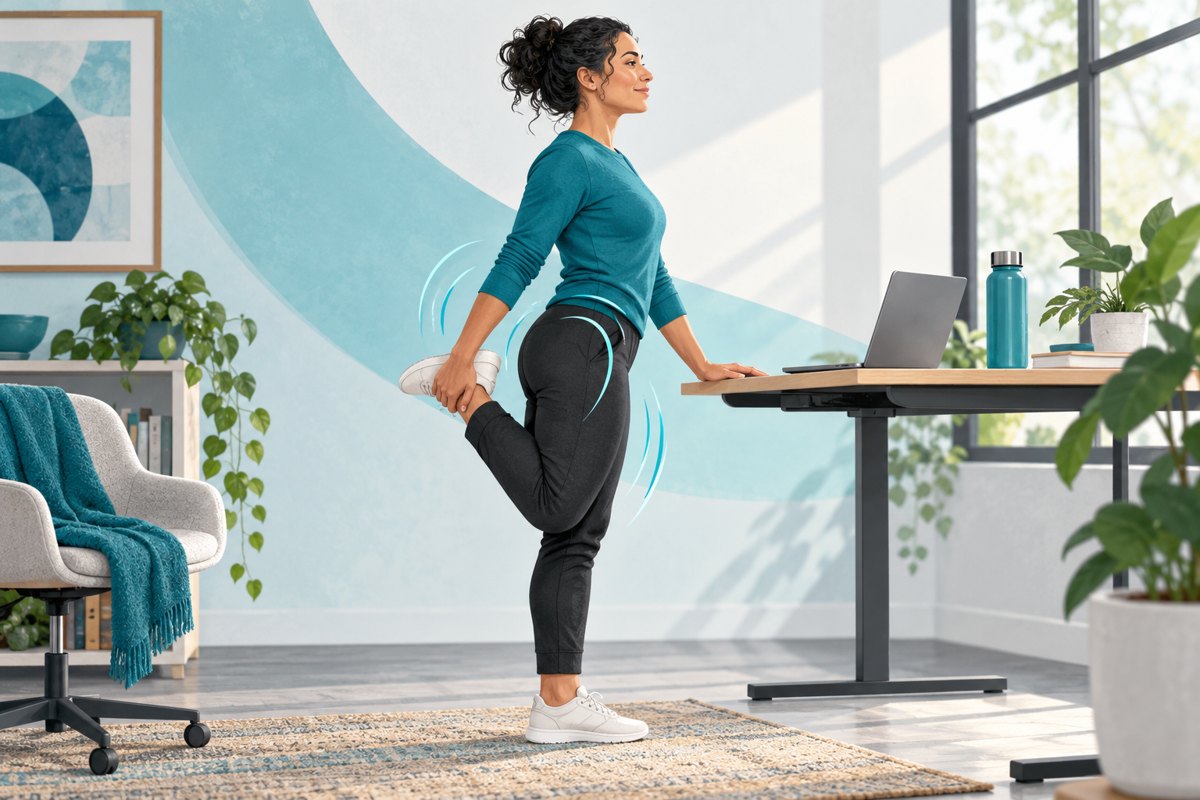
- Vary your position during desk work and take short movement breaks.
- Arrange your work surface so you can reach comfortably without repeatedly leaning or twisting.
- Build activity gradually rather than jumping back into your previous training load.
- Ask for exercise guidance matched to your examination, experience, and symptoms.
How Alpha Spine Center approaches the concern
At our Milton practice, NUCCA Upper Cervical Chiropractic is our foundation. We also consider the low back, hips, extremities, and the demands of daily activity and sport. Dr. Drew’s Sports Chiropractic approach helps broaden that assessment. Your examination guides whether NUCCA care, extremity care, exercise guidance, co-management, or a referral is appropriate. A lower cross syndrome label does not automatically mean you need an upper cervical adjustment.
When to seek further evaluation
Persistent or worsening pain deserves assessment. Seek urgent medical care for new bowel or bladder changes, numbness around the groin, or rapidly worsening leg weakness. Share any recent injury or other concerning changes with your healthcare professional rather than relying on a posture checklist.
Continue exploring
- Sports Chiropractic & Athlete Care
- NUCCA Upper Cervical Care
- Upper Cross Syndrome: Neck, Shoulders & Desk Habits
Talk with our team in Milton
Have a movement or musculoskeletal concern? Learn what to expect as a new patient, or contact Alpha Spine Center to discuss an appointment.
Sources and further reading
This article provides general education and does not diagnose a condition or replace individual medical advice. Illustrations are for education and do not depict actual patients or treatment results.