
Our Care · Milton, Georgia

Migraine, Headache & Trigeminal Neuralgia Care

Your Headache Has a Story. We Start by Listening.

Recurring headaches or facial pain can change how you work, sleep, and spend time with the people you love. At Alpha Spine Center, Dr. Bryan Salminen and Dr. Andrew “Drew” Salminen take time to understand your symptoms, history, and goals.

NUCCA Upper Cervical Chiropractic is the foundation of our practice. Our doctors bring a comprehensive consultation and examination to your headache or facial pain concerns, then develop a plan around your findings and the life you want to get back to.

The person behind the symptoms.

A Careful Evaluation. A Clear Next Step.

Headache care in Milton, GA starts with understanding what you are experiencing. Migraine, tension-type headache, cluster headache, trigeminal neuralgia, and cervicogenic headache have different features and may need different care. In addition, more than one condition can occur together.

Our doctors review your pattern of pain, neck symptoms, medications, previous diagnoses, and relevant records. Then, we assess the cervical spine alongside the rest of your history and examination to understand where care can help.

Personal attention. Realistic goals. Appropriate referrals.

Learn about our NUCCA approach and meet Dr. Bryan and Dr. Drew.

Dr. Bryan Salminen discussing care with an older couple at Alpha Spine Center.

Patients travel. We take time to listen.

From Across the Southeast. Looking for a Different Approach.

Patients travel from across the southeastern United States to seek care at Alpha Spine Center for migraines, headaches, and trigeminal neuralgia. Some arrive after years of appointments and treatments without the relief they hoped for, feeling that their concerns have slipped through the cracks.

Above all, we take those experiences seriously. Dr. Bryan and Dr. Drew listen to the full story, perform a thorough consultation and examination, and explain how our specialized NUCCA approach may fit your findings. Our existing patient testimonies include people who describe relief and a return to everyday activities during care at ASC.

You deserve to be heard, examined carefully, and given a plan that makes sense for you. If you are traveling for care, contact our team about appointment planning and which records to bring.

Read the experiences behind the journey →

Understand the pattern.

Different Conditions. Different Care Needs.

These descriptions are a starting point for conversation, not a way to diagnose yourself.

01 · MIGRAINE

More Than a Headache.

Migraine is a neurological disorder. For example, attacks often involve moderate to severe throbbing pain, sometimes on one side, nausea, and sensitivity to light or sound. In adults, an untreated attack commonly lasts 4–72 hours. In addition, some people experience aura, such as flashing lights, zigzag patterns, blind spots, or temporary sensory changes; many do not.

Migraine can also involve speech or language difficulty, including slurred words, and numbness or tingling that may affect a hand or arm. In addition, certain migraine subtypes can produce symptoms that resemble a stroke. Typical visual aura affects the visual field of both eyes. In contrast, rare retinal migraine can cause temporary vision loss in only one eye. However, this needs assessment; do not assume migraine is the cause.

New or sudden stroke-like symptoms, slurred speech, weakness, or loss of vision require emergency assessment—call 911. Therefore, a familiar migraine diagnosis does not rule out another cause of new symptoms.

At ASC, we explore the whole pattern: headache symptoms, cervical spine findings, sleep, activity, previous injuries, and your response to prior care. Next, our doctors assess whether NUCCA care is appropriate for your upper cervical findings. Together, we build a plan and track headache frequency, comfort, and daily function.

Patient education: migraine → · Understanding visual and speech symptoms →
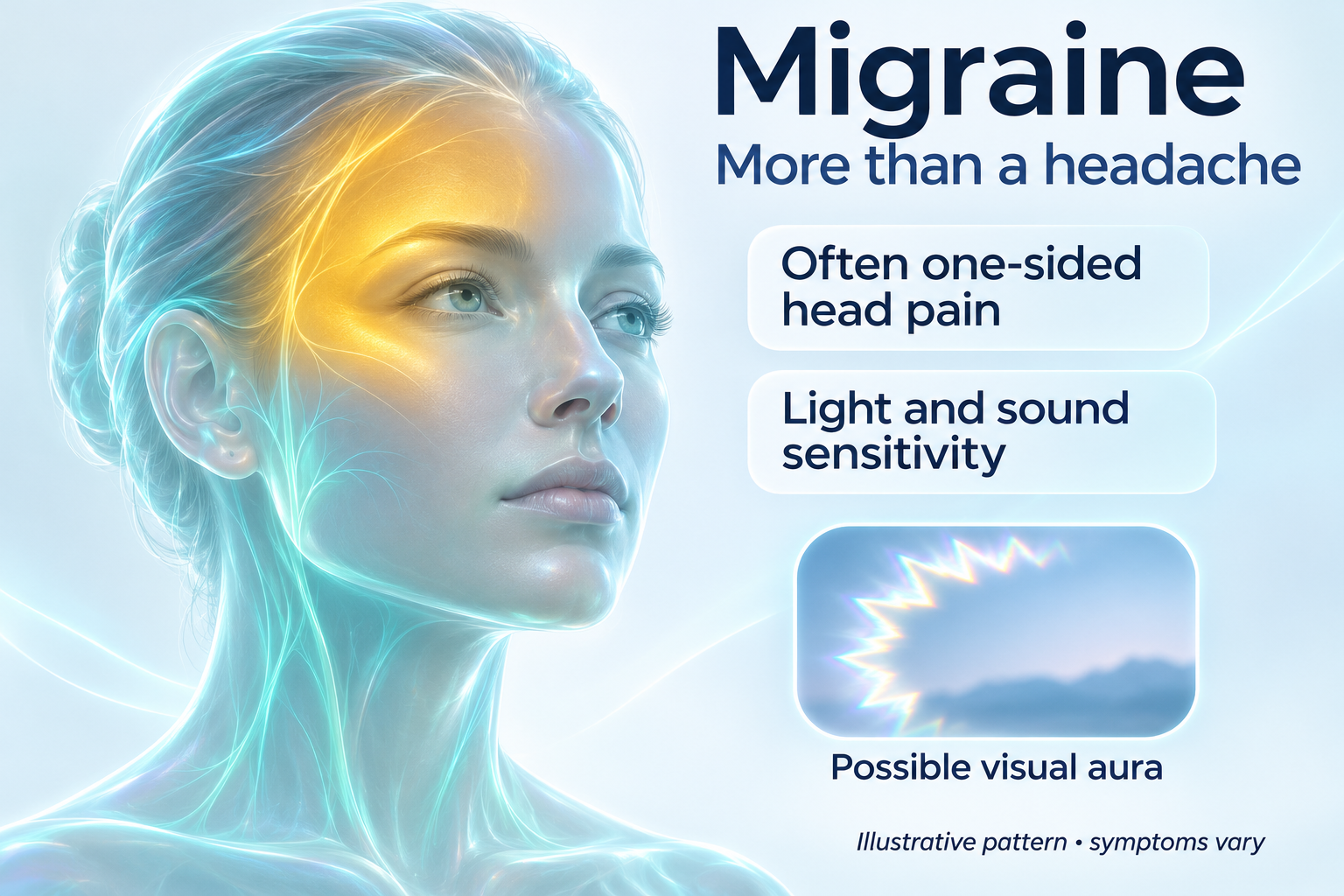
Illustrative migraine symptoms, showing one-sided head pain, light and sound sensitivity, and possible visual aura.
Select the illustration to view the full image.

Occiput · C1 · C2

The Upper Cervical Spine & Headache Pathways.

The occiput—the base of the skull—and the first two neck vertebrae, C1 (atlas) and C2 (axis), form the cranio-cervical junction. Here, the lower brainstem (medulla) continues into the upper cervical spinal cord.

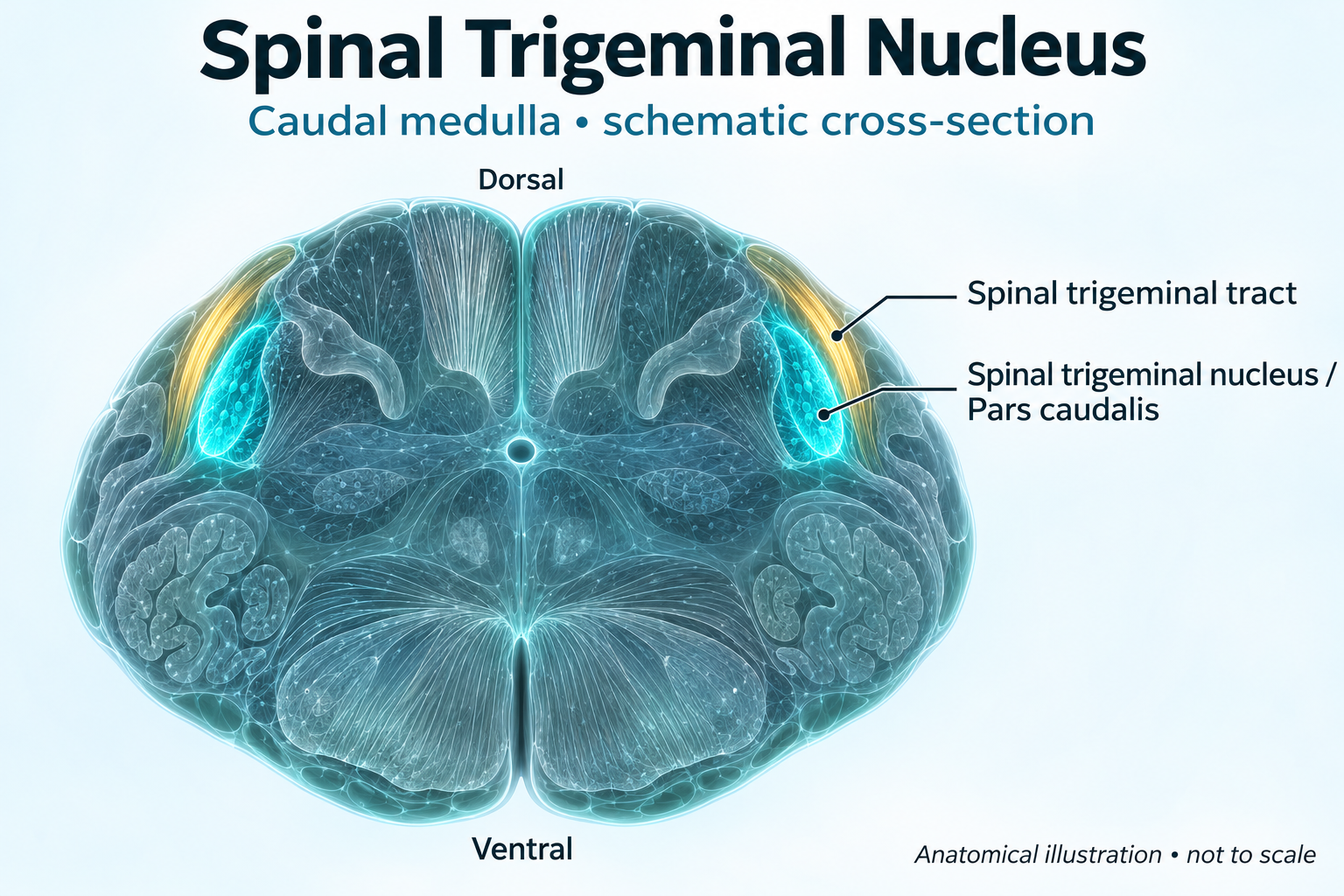
The spinal trigeminal nucleus extends from the brainstem into the upper cervical cord. Its lower, or caudal, portion and the upper cervical sensory pathways form part of the trigeminocervical complex. Here, pain signals from the head and upper neck converge. Thus, the C1–C2 spinal cord region is part of this connected sensory system.

At ASC, Dr. Bryan and Dr. Drew evaluate upper cervical alignment and function as part of the headache examination. In addition, they report observing headache relief in some patients following NUCCA care directed at assessed upper cervical misalignments/subluxations. Similarly, our patients describe these experiences in their testimonies. However, these are clinical observations and personal reports; individual results vary.

See Headache Patient Testimonies →

Anatomy reference: The fifth cranial nerve in headaches.
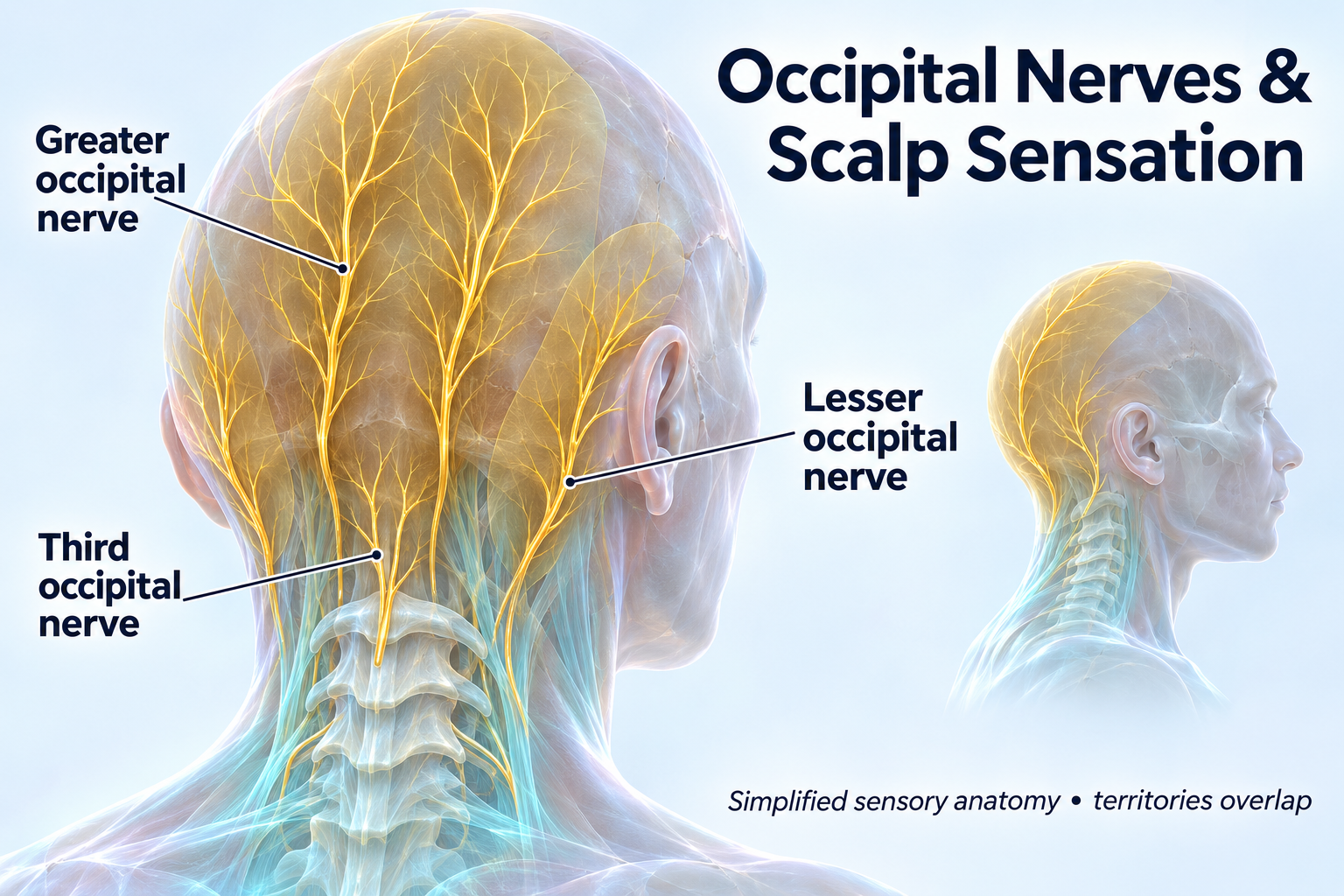
Posterior skull and scalp showing greater, lesser, and third occipital nerve pathways and overlapping sensory territories.
Occipital nerves: sensory anatomy of the back of the scalp. Occipital neuralgia and migraine are different diagnoses.
Schematic caudal medulla cross-section highlighting the spinal trigeminal tract and spinal trigeminal nucleus pars caudalis.
Spinal trigeminal nucleus and tract: a schematic anatomy reference in the caudal medulla.

02 · TENSION-TYPE HEADACHE

Pressure, Tightness & Tenderness.

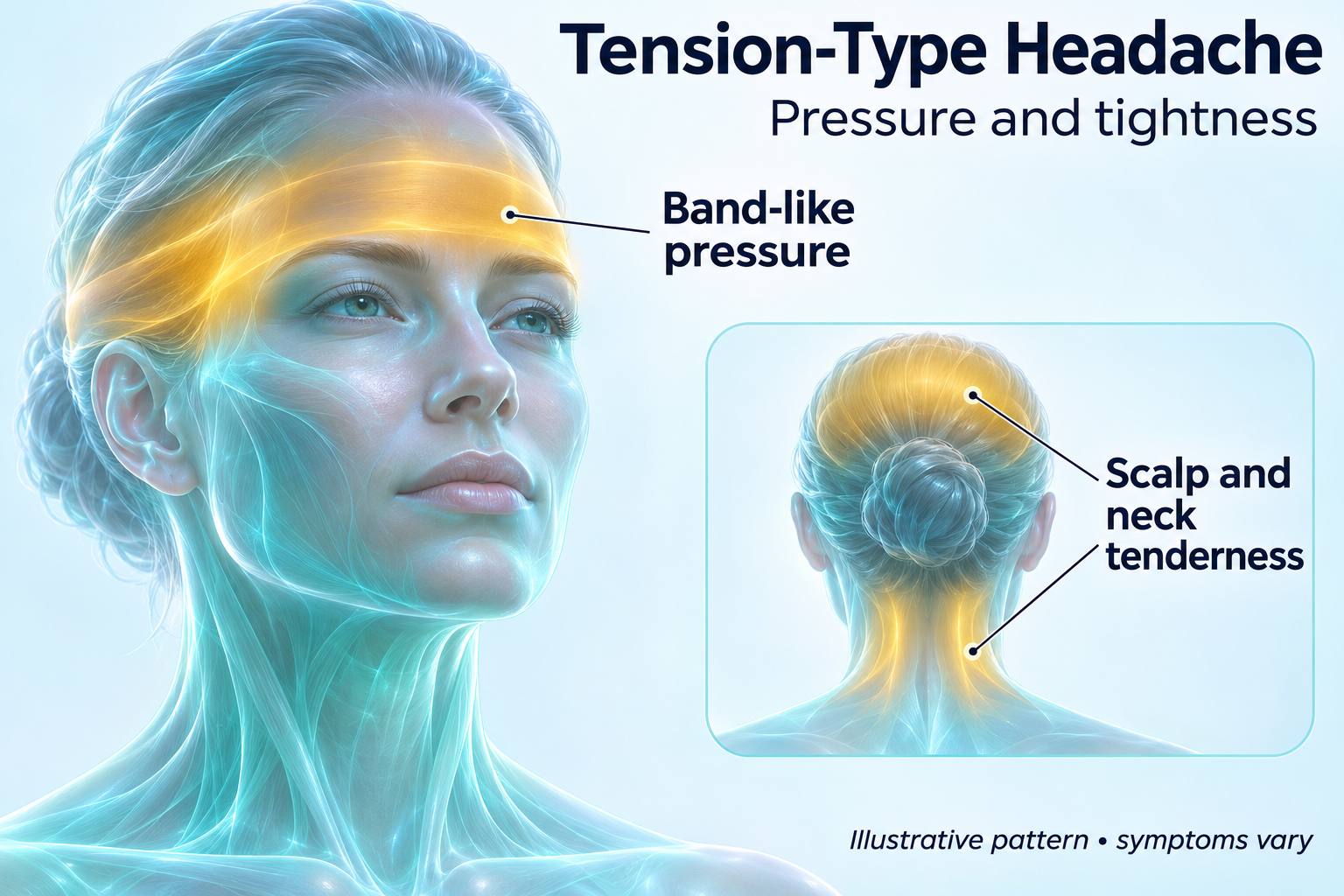
Tension-type headache often feels like pressure or a tight band on both sides of the head. In addition, some people have scalp, neck, or shoulder tenderness. The pain is usually mild to moderate. In contrast, nausea and vomiting are less typical than in migraine.

For example, stress, fatigue, sustained positions, and jaw clenching may be relevant. The label does not mean every headache comes from tight muscles or spinal alignment. Therefore, we assess movement and musculoskeletal findings while considering other causes.

Management may involve sleep habits, stress strategies, activity breaks, and clinician-guided medication. However, frequent use of headache medicines can contribute to medication-overuse headache. Therefore, review your pattern with the prescriber.

Patient education: tension headache →

Illustrative tension-type headache pattern with band-like head pressure and scalp and neck tenderness.
Select the illustration to view the full image.

Desk work · Computer time · Phones & tablets

Desk Work, Devices & “Text Neck”.

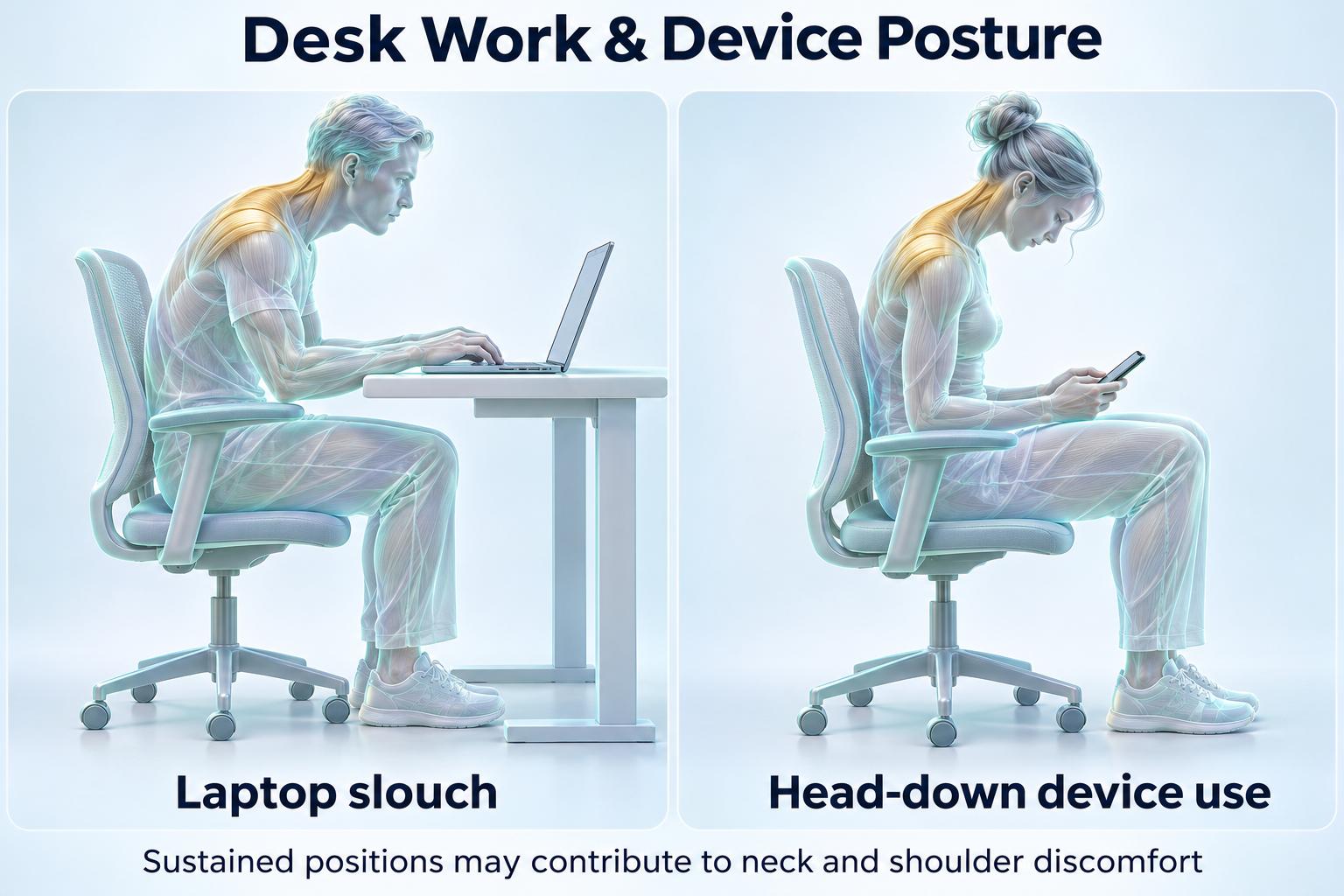
Hours of desk work and computer use can keep the head forward and the shoulders rounded. For example, looking down at a laptop, iPhone, iPad, or other phone or tablet for long periods can increase the load on the neck. This sustained load affects its neuromusculoskeletal system: the muscles, joints, and supporting tissues. As a result, muscles that support the head may become fatigued, tense, or tender.

“Text neck” describes the prolonged head-down position commonly used with devices. The cervical spine has seven vertebrae, C1–C7. In people with an underlying disc or joint problem, certain neck positions can also aggravate an irritated cervical nerve root. However, posture alone cannot establish nerve-root compression. Pain traveling into an arm, tingling, numbness, or weakness calls for an examination.

At ASC, our doctors review your workstation, device habits, posture, movement, and examination findings together. Then, we discuss practical changes and a care plan to support more comfortable work and everyday activity.

Two seated people demonstrating laptop slouching and head-down phone use, with posterior neck and shoulder muscles highlighted.
Illustrative examples of sustained working positions. Select the image to view it at full size.
  • Raise the screen toward a comfortable viewing height; for longer laptop sessions, consider a separate keyboard and mouse.
  • Also, bring phones and tablets closer to eye level while supporting your arms.
  • Finally, change positions and take regular movement breaks. Avoid holding any one position for long stretches.

Patient education: OSHA workstation positioning · AAOS: cervical nerve-root irritation.

03 · CLUSTER HEADACHE

Severe Headaches. A Thorough NUCCA Evaluation.

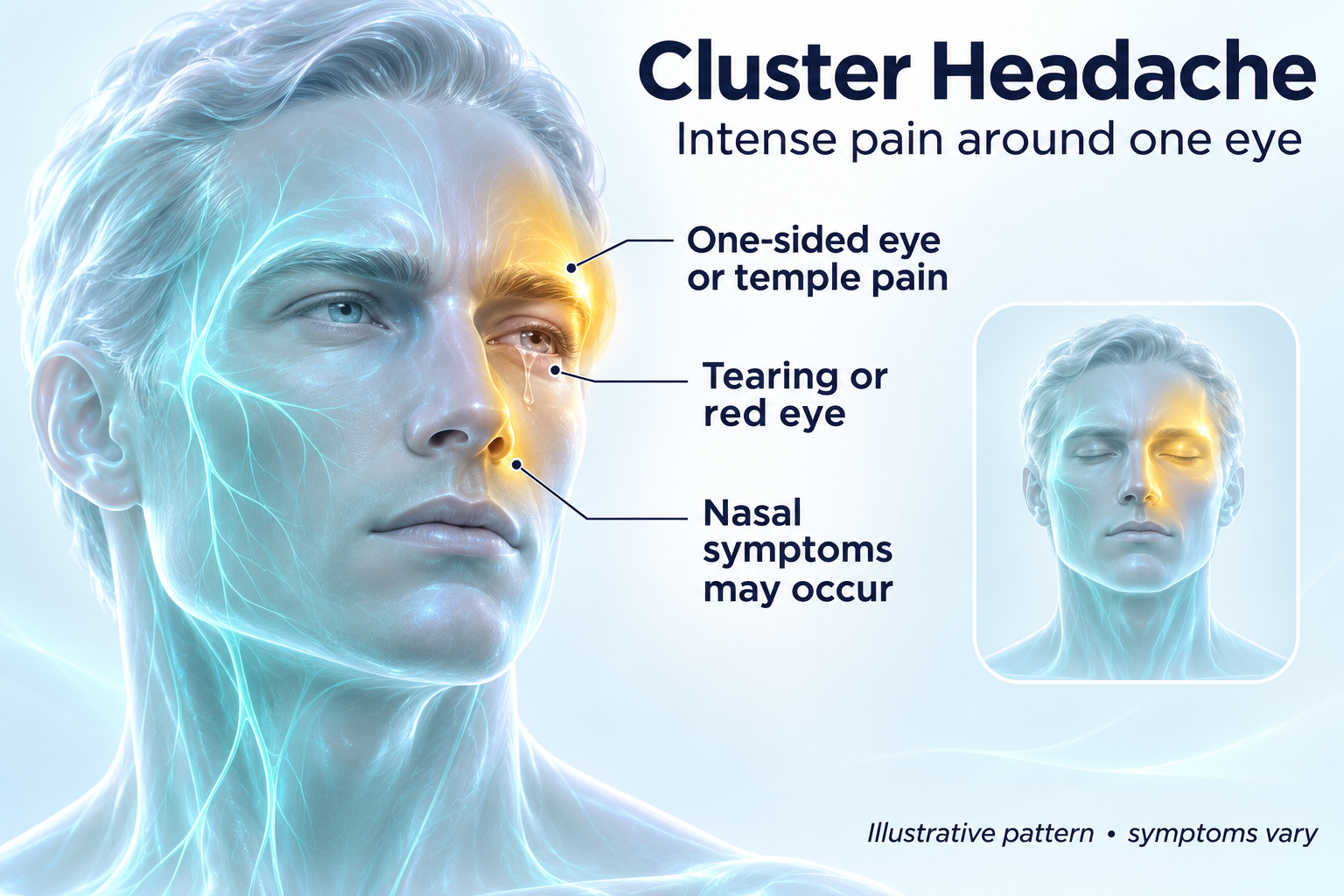
Cluster headache causes extremely severe pain, usually around one eye or temple. In addition, tearing, a red eye, nasal congestion, or a drooping eyelid may occur on the painful side. Attacks often last 15–180 minutes and can recur during a cluster period. In addition, people may feel restless during an attack.

The doctors at Alpha Spine Center are trained to evaluate headache presentations. First, they take a detailed history and perform an examination. They also assess the upper cervical spine to determine whether NUCCA care is appropriate for you.

Our focus is a clear plan for the person experiencing these attacks. If the findings indicate a need for a neurologist or another specialist, our doctors make that referral and coordinate care.

Patient education: cluster headache →

Illustrative cluster headache pattern showing one-sided eye pain, tearing, and nasal symptoms.
Select the illustration to view the full image.

04 · TRIGEMINAL NEURALGIA

Facial Pain Deserves a Precise Diagnosis.

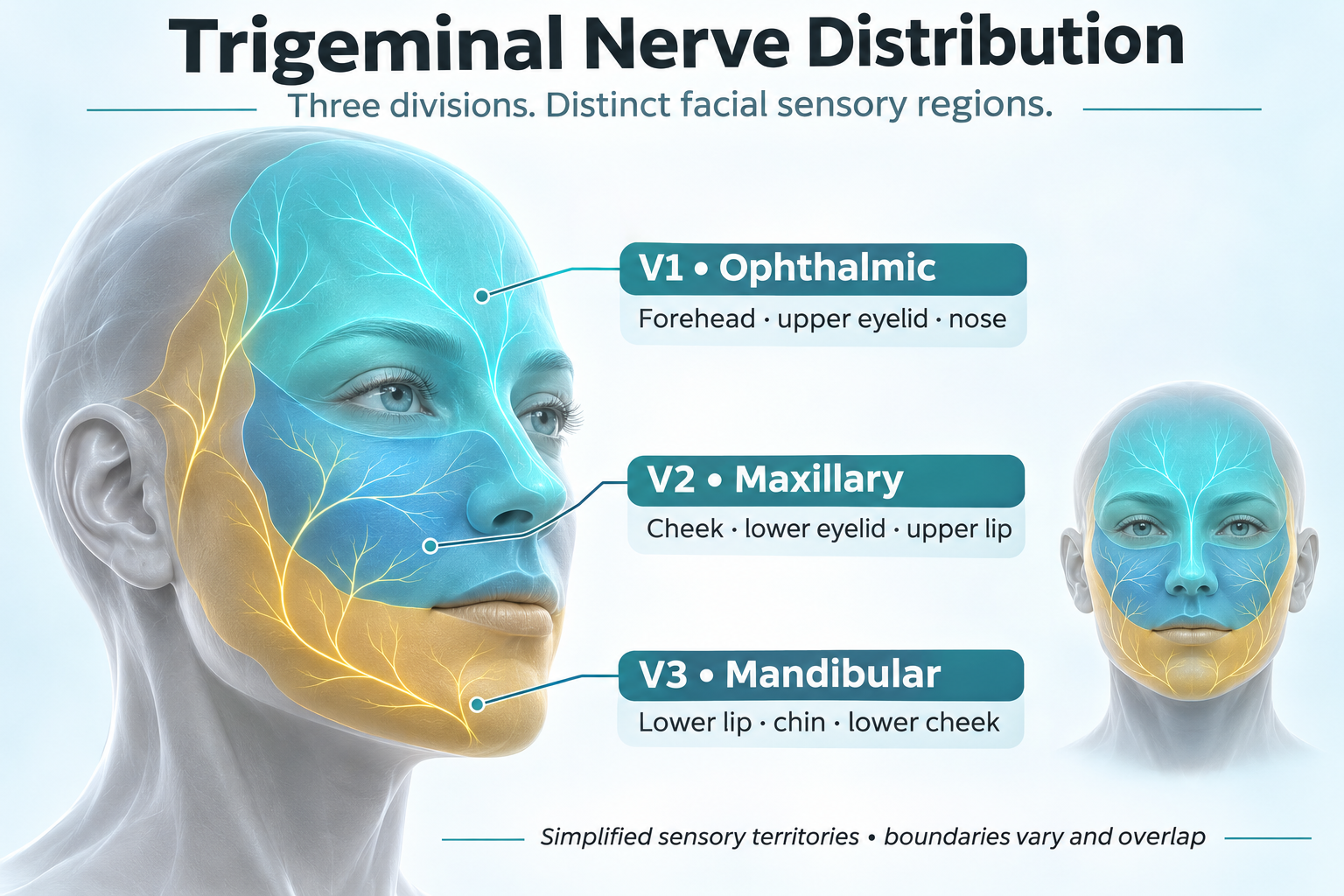
Trigeminal neuralgia is a nerve pain condition that can cause brief, intense, electric shock-like pain in the cheek, jaw, or other parts of the face. For example, light touch, eating, talking, or brushing teeth may trigger episodes. Some people also have ongoing aching or burning.

However, dental disease and other disorders can cause similar pain. Therefore, assessment may include dental, neurological, or orofacial pain evaluation and brain MRI to look for an underlying cause.

At ASC, our doctors perform a thorough consultation and examination, including assessment of upper cervical alignment and function, to determine whether NUCCA care is appropriate as part of your plan. For example, our published patient library includes Brenda Parker’s personal account of relief from facial pain during care. Throughout care, we track your symptoms and daily function. When needed, we also coordinate with medical professionals for pain relief.

NIH: understanding trigeminal neuralgia →

Trigeminal nerve sensory distribution in the face, with ophthalmic V1, maxillary V2, and mandibular V3 regions.
Select the illustration to view the full image.

05 · CERVICOGENIC HEADACHE

When the Neck Is Part of the Diagnosis.

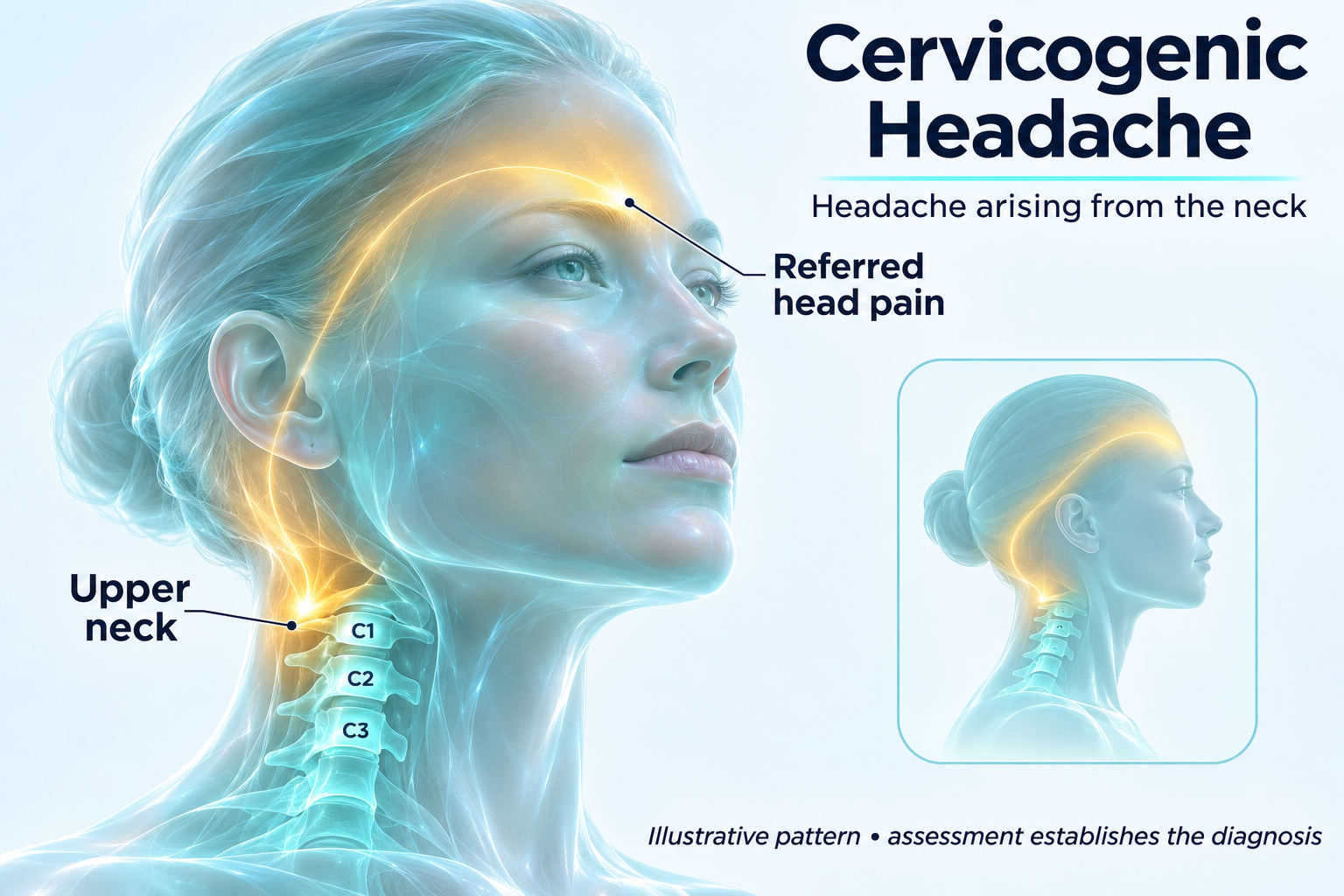
Cervicogenic headache is a secondary headache attributed to a disorder of the neck. Reduced neck movement and a headache provoked by certain movements can be clues, but similar findings can occur with migraine and tension-type headache.

A thorough consultation and examination help our doctors determine whether the cervical spine is contributing to your headache. To do this, they consider the timing and pattern of symptoms, movement testing, and relevant imaging together. Therefore, a single finding does not establish the cause.

After evaluating your findings, the professionals at ASC explain whether cervical spine care is appropriate and whether coordinated care with another professional is needed. For example, your plan may include NUCCA care and movement guidance tailored to you. Then, follow-up tracks headache pattern, neck function, and the activities that matter to you.

International Headache Society: diagnostic criteria →

Illustrative cervicogenic headache pattern showing upper neck and referred head pain.
Select the illustration to view the full image.

Dr. Bryan & Dr. Drew · Our mission

Primary Care Chiropractic Doctors. A Plan Around You.

Our mission is to detect and correct spinal misalignments/subluxations through individualized chiropractic care. We listen, examine thoroughly, explain our findings, and assess how NUCCA Upper Cervical Chiropractic can fit your needs.

In addition, we work hand in hand with other specialists and healthcare professionals when needed. For example, this includes coordinating medical pain management. Our doctors also recognize when a concern needs urgent attention or referral.

Our patient stories describe individual experiences; results vary. Therefore, your examination and response to care guide your own plan.

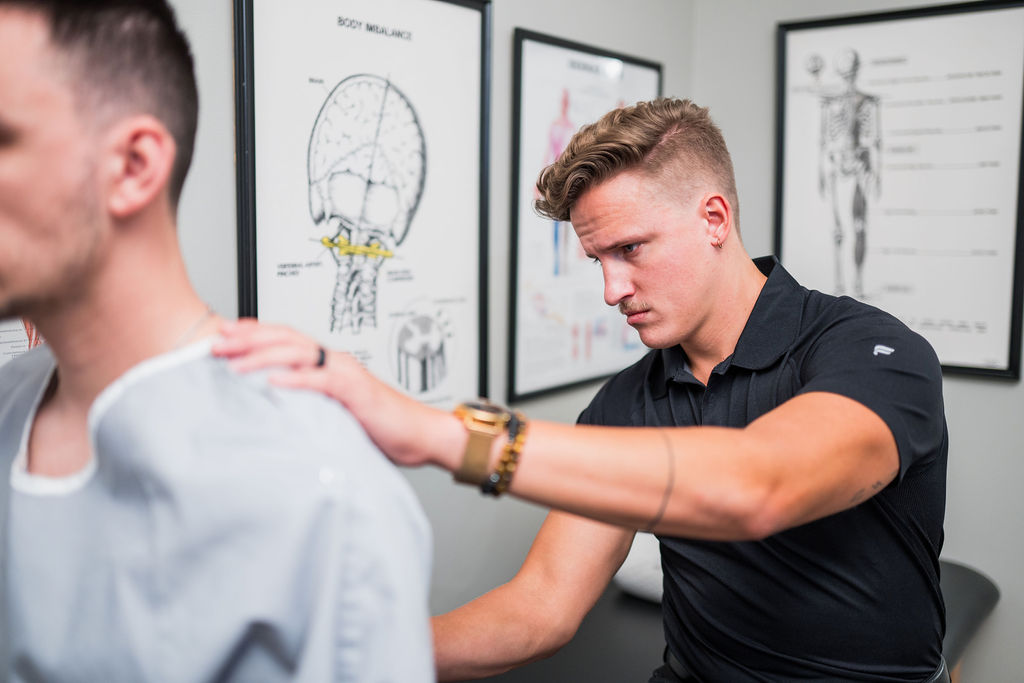
Dr. Drew Salminen evaluating a patient's shoulders and posture at Alpha Spine Center.

Listen. Evaluate. Explain.

Where NUCCA May Fit.

NUCCA focuses on the upper cervical spine using a planned, gentle adjustment. For example, an evaluation considers symptoms, movement, posture, examination findings, and relevant imaging. Our NUCCA Care page explains the practice's approach.

Your findings guide a personalized care plan. First, we explain the purpose of each recommendation and discuss alternatives and relevant risks. Then, we reassess your response over time and measure progress against your goals.

Above all, we want you to understand our findings, the reasons for our recommendations, and how we review progress. In short, the goal is a plan that supports your comfort, function, and everyday life.

An individual plan. Measured follow-up.

Your Evaluation & Care Plan.

1. Tell Your Story.

Bring a symptom diary, medication list, relevant reports, and prior imaging. First, we discuss onset, frequency, duration, pain location, triggers, neurological symptoms, injuries, and effects on your daily life.

2. Examine & Explain.

We assess relevant neck movement, posture, and examination findings, screen for concerning symptoms, and explain what may need medical assessment. First, our doctors review existing records before considering additional imaging. However, they use new imaging only when clinically indicated.

3. Choose Appropriate Care.

If chiropractic care is suitable, we agree on specific goals and discuss expected follow-up. In addition, your plan may involve exercise guidance or coordination with your primary care clinician, neurologist, dentist, or physical therapist.

4. Reassess What Matters.

Track headache days, symptom severity, activity limits, and neck function separately. If symptoms worsen or care is not helping agreed goals, reassess the diagnosis and plan rather than continuing automatically.

More voices. Personal experiences.

Find a Patient Story Like Yours.

Explore our existing patient accounts by condition, read the original paper testimonies, or visit our Google reviews. These stories describe individual experiences; results vary.

Questions deserve clear answers.

Before Your First Visit.

How do you decide whether NUCCA care is right for me?

Our doctors begin with your history, a thorough examination, and relevant records. Next, they explain the findings and discuss whether NUCCA care fits your needs. Together, you agree on goals and follow-up. Then, your response to care helps guide the next step.

Should I stop my medication before an evaluation?

No. Continue medicines as prescribed. Instead, discuss side effects, medication overuse concerns, or changes with the prescribing clinician. After all, a patient story about medication use is not guidance for your own treatment.

Will I need new X-rays or a brain scan?

Not every headache requires imaging. We review relevant existing records and discuss whether additional imaging is clinically indicated. However, brain imaging and specialist testing address different questions from a cervical assessment.

What should I bring?

Bring your symptom diary, medication list, previous diagnoses, imaging reports, and specialist recommendations. Also, note what you hope to return to doing and what has changed recently. For urgent warning signs, seek medical care first.

Appointments · Alpha Spine Center

Let's Understand Your Next Step.

We welcome patients from Milton, Alpharetta, Roswell, and surrounding communities.
Bring your questions. We will listen, explain the findings, and discuss appropriate care.

12220 Birmingham Hwy, Suite 40, Milton, GA 30004
For urgent or emergency symptoms, seek medical care instead of waiting for an appointment.

Patient Education & Related Care

General patient education, not an individual diagnosis. Your findings and medical history guide your care.